Canada is one of the most popular choices for Indian students heading abroad, and the reasons are practical: globally recognised universities, fees many families find affordable, a post-study work permit that can run for years, and real immigration options once you graduate. It's also a welcoming place to live, with a high quality of life, which is a big part of why thousands of international students pick Canada every year.
This guide covers the basics of how to study in Canada. For anything specific to you, like education loans, scholarships, a study gap or studying in Canada without IELTS, just call us. The first conversation with our counsellors is free.

Why Study in Canada?
- Globally recognised universities
- Affordable tuition and good return on your investment
- Post-graduation work permit of up to 3 years
- A safe, multicultural society
- Good healthcare
- Scholarships of up to CAD 21,000
Canadian degrees carry weight around the world, and you can choose from a wide range of subjects without paying the fees of some other English-speaking destinations. Outside the classroom you get a healthy lifestyle, good work options after study and well-established immigration routes. Want to know how much money you'll need, or whether you can go straight after Class 12? Ask us and we'll walk you through it.

Why Choose Canada?
Canada has a reputation for being warm towards immigrants, and its policies back that up. Graduates have plenty of job opportunities, and you can get a post-study work permit for up to 3 years after you finish. That gives you time to work, earn and settle in properly before deciding on your next step.
- Immigrant-friendly policies
- Post-study work permit of up to 3 years
- Plenty of job openings for graduates
Stuck on your SOP for Canada? Our counsellors can help you shape it.

Canada's Education System
You can study for an undergraduate, master's or doctoral degree in Canada, and the courses are built around careers. Engineering, healthcare, ecology and IT are among the most popular choices if you want a degree that leads somewhere solid. Many well-regarded Canadian colleges and institutes also accept students with a study gap. What they want is a valid reason and clean paperwork, and we can help you put both together.
- High-quality teaching
- Flexible learning pathways
- Strong research
- Affordable for Indian students
- Practical, varied courses

Canadian Student Visa Requirements
To study in Canada you need a student visa and a study permit. Think of it this way: the visa gets you into the country, and the permit lets you stay. When your study permit is approved you'll also get either a visitor visa or an Electronic Travel Authorization (ETA). Every approved permit goes to an applicant who meets the Canadian student visa requirements, so check them carefully.
- Study visa and permit
- Visitor visa or ETA
Top Universities in Canada
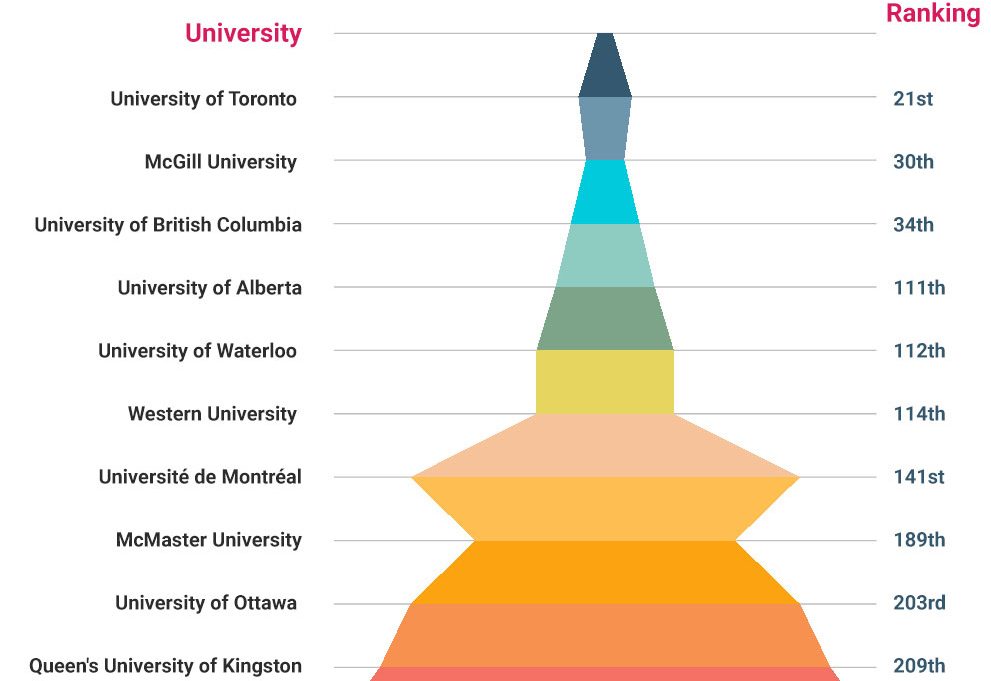
Here's where Canadian universities stand in the QS World University Rankings 2024:
Cost to Study in Canada for Indian Students
Statistics Canada's 2025/26 averages for international students are CAD 41,746 a year for undergraduate programmes and CAD 24,028 for graduate programmes. Fees start from around CAD 16,000 and vary by course and university. Humanities, education and arts programmes are usually cheaper, while medicine and engineering cost more.
For the study permit you also have to show living funds of CAD 23,448 a year (for applications from 1 September 2026), on top of your first-year tuition. We'll work out a proper estimate once we've looked at your profile, and that assessment is free.
Talk to a Counsellor
Information online comes from mixed sources, and it's easy to get confused. A free session with one of our counsellors lets you plan everything in one place, from choosing a university to drafting a strong SOP, so you go in prepared and confident.
Apply to a University and Get Your Acceptance Letter
Once a Designated Learning Institution (DLI) accepts you, you're eligible to apply for a study permit in Canada.

Documents required for Canadian Student Visa
Passport
Your passport must stay valid for the whole period of your student visa.
Acceptance Letter
An acceptance letter from a DLI. If you're going to Quebec, you'll also need a Quebec Acceptance Certificate.
Proof of Funds
Evidence that you have enough money for tuition and living expenses.
Passport-Size Photographs
Recent photographs in the standard passport size.
Medical Exam
A health exam carried out by an approved physician.
English Language Scores
Your English test results.
Statement of Purpose
Why you want to study in Canada, in your own words.
Letter of Attestation
Needed if you're planning undergraduate or non-degree studies.
Post-Study Work Permit
After graduating from a Designated Learning Institution (DLI), international students can get a Post-Study Work Permit. It's a temporary visa that lets you work in Canada once your course is over. Some diplomas are aligned with the PGWP, so choosing one in the right field helps you qualify. These PGWP-aligned diplomas are in demand:
- Aviation Technician - Aircraft Maintenance
- Advanced Ergonomics Studies
- Advanced Care Paramedic
- Agri-Business Management
- Artificial Intelligence and Machine Learning
- Addictions and Mental Health
- Aerospace Operations Management
- Autism And Behavioural Science
Ask us if you'd like to see more programmes like these.
How We Can Help
Plenty of students want to study in Canada, and not all of them get there. Our counsellors and authorised immigration consultants will guide you through each step, from picking the right course to getting your visa. Book a free session and we'll start with your profile.