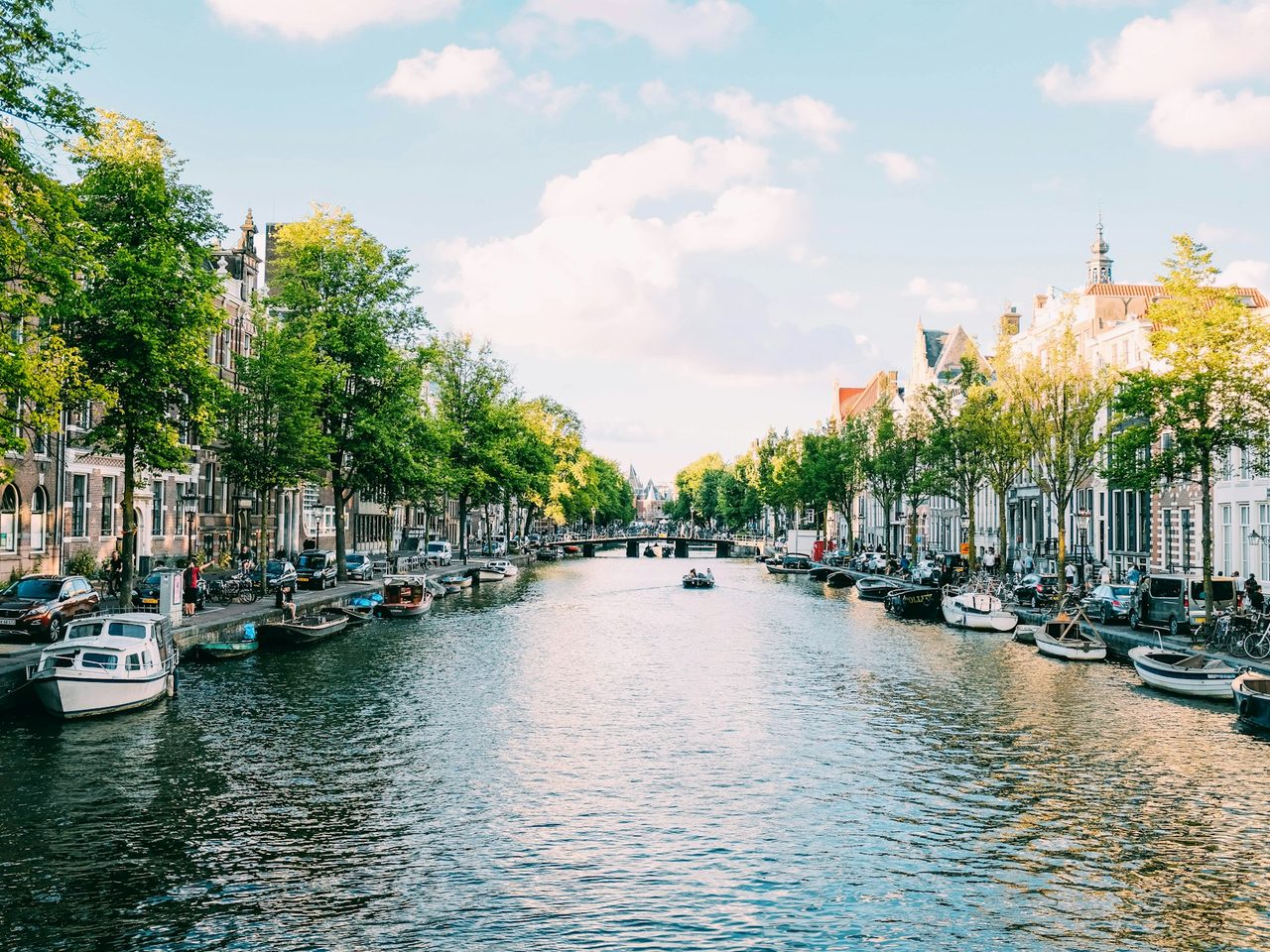
Few countries outside the English-speaking world offer as many English-taught degrees as the Netherlands, which is a big reason it has become one of Europe's most popular study destinations for Indian students. Its universities rank among the best in Europe, and teaching is built on small groups, projects and independent thinking. If you're planning to study in the Netherlands, the decisions that matter most are which type of university suits you, when to apply, how to budget and how the residence permit works.
Why Study in the Netherlands?
Dutch higher education pairs strong research with a practical, career-focused approach. Classes are interactive. You'll be expected to discuss, present and work on real problems with classmates from many countries. And since almost everyone speaks English, day-to-day life is easy for international students.
- More than 2,000 English-taught bachelor's and master's programmes
- Several universities ranked in the world's top 200
- Your university applies for your entry visa and residence permit
- Part-time work during the year and full-time work in June, July and August
- A one-year orientation year permit to look for work after graduating
- A central location with easy travel across the Schengen area
Research Universities or Universities of Applied Sciences?
There are two main types of higher education institution in the Netherlands. Pick between them first, because the choice shapes how you're taught, what you need to get in and where your career goes next.
| Research universities (WO) | Universities of applied sciences (HBO) | |
|---|---|---|
| Focus | Academic and research-based study | Practical, profession-oriented study |
| Bachelor's length | 3 years | 4 years (including internships) |
| Typical entry from India | Strong Class 12 results; some programmes ask for a foundation year or an extra year of study | Class 12 with the subjects the programme needs |
| Best for | Students heading for a master's, research or specialist careers | Students who want hands-on skills and internships |
| Examples | TU Delft, University of Amsterdam, Leiden University | Hanze, Fontys, The Hague University of Applied Sciences |
Top Universities in the Netherlands
Delft University of Technology (TU Delft)
The country's leading technical university, known worldwide for engineering, architecture, aerospace and computer science.
University of Amsterdam
A large research university with strong programmes in business, economics, communication, social sciences and data science.
Leiden University and Utrecht University
Two of Europe's oldest universities, both highly ranked for law, life sciences, international relations and the humanities.
Erasmus University Rotterdam
Home to the Rotterdam School of Management and a top choice for business, finance and economics.
Eindhoven, Wageningen and Groningen
Eindhoven University of Technology is known for engineering and design. Wageningen University & Research specialises in agriculture, food and environmental science. The University of Groningen covers a broad range of subjects.
Popular Courses for Indian Students
- Computer Science, AI and Data Science
- Mechanical, Electrical and Aerospace Engineering
- Business Administration and International Management
- Finance and Economics
- Logistics and Supply Chain Management
- Agriculture, Food Technology and Environmental Science
- Industrial and Product Design
Cost of Studying in the Netherlands
If you're from outside the EU, you pay the institutional tuition fee, which each university sets itself. Fees differ by programme, and engineering, medicine-related and business programmes usually cost more.
| Expense | Typical amount |
|---|---|
| Bachelor's tuition (non-EU) | €9,000 – €20,000 a year |
| Master's tuition (non-EU) | €12,000 – €25,000 a year |
| Housing | €500 – €900 a month (higher in Amsterdam) |
| Food, transport and personal costs | €400 – €600 a month |
| Health insurance | €40 – €120 a month, depending on your situation |
Housing is the hardest part in Dutch university cities. Apply for university or student housing as soon as you accept your offer, and never pay a deposit for a room you haven't verified.
Admission Requirements and Deadlines
- Class 12 results (bachelor's) or a relevant bachelor's degree (master's) at the level the programme requires
- An English test: usually IELTS 6.0 for bachelor's and 6.5 for master's, or an equivalent TOEFL or PTE score
- A statement of purpose or motivation letter, a CV and sometimes reference letters
- Mathematics or other subject requirements for many technical and business programmes
- An application through Studielink and the university's own portal
Most students start in September. Limited-place (numerus fixus) bachelor's programmes close on 15 January, and most non-EU deadlines fall between January and May. A few programmes also start in February. We'd suggest starting your preparation a year before you plan to begin.
Student Visa and Residence Permit
As an Indian student, you need an entry visa (MVV) and a residence permit to study in the Netherlands. Helpfully, your university is a recognised sponsor and applies for both on your behalf through the IND.
- Accept your offer and pay the deposit or proof of funds your university asks for
- Upload your documents to the university's immigration portal
- The university submits the entry and residence application to the IND
- Collect your MVV sticker at the Dutch visa application centre in India
- After you arrive, register with your city and collect your residence permit card
Working During and After Your Studies
During the academic year you can work up to 16 hours a week, and full-time in June, July and August. Your employer arranges the work permit (TWV). Once you graduate, you can apply for the orientation year (zoekjaar hoogopgeleiden). It's a one-year permit to look for work or start a business, and if you find a qualifying job it can lead to a highly skilled migrant permit.
How Glocal EduGrow Helps
We help you decide between a research university and a university of applied sciences, build a realistic shortlist and meet every deadline. We'll also work with you on a strong motivation letter and get you ready for the residence permit and pre-departure, including housing. Get in touch when you're ready to start your shortlist.