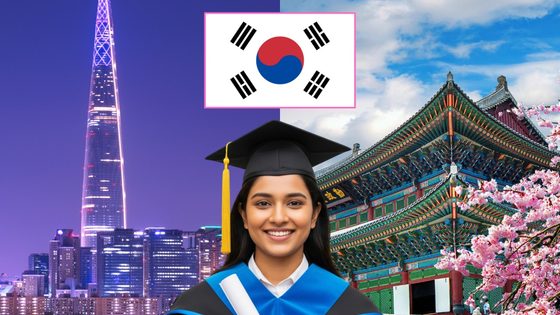

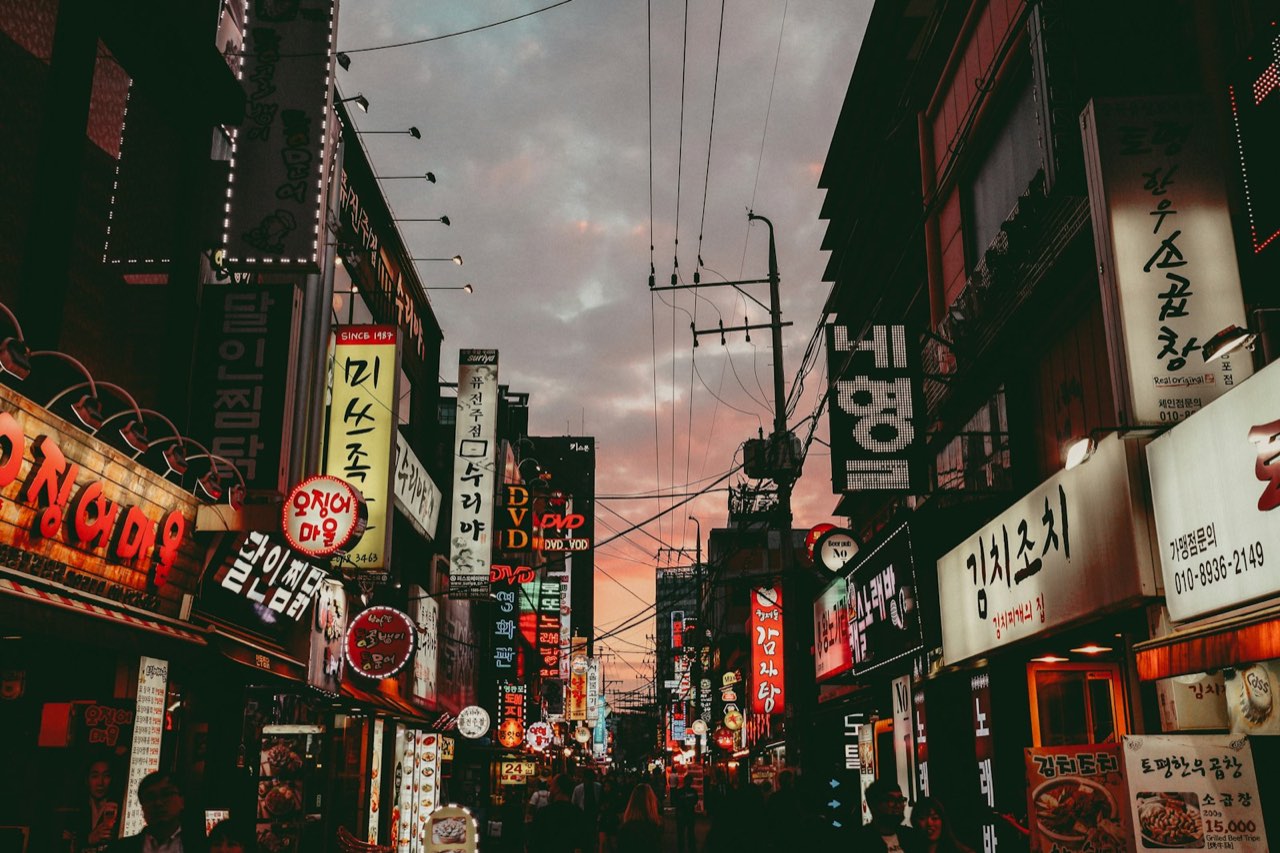
South Korea, often called the Land of the Morning Calm, mixes old and new, nature and high technology. You get a rich history set in beautiful countryside and, in Seoul, a leading tech and entertainment scene. More international students now choose to study in South Korea, and the reasons are practical ones.
Korean universities offer a wide range of programmes and are known for their focus on research and technology. Most students also find living and studying here fairly affordable, so alongside the views and the friendships you get good value.

Why Study in South Korea?
- Affordable tuition fees
- Plenty of scholarships
- A strong education system
- K-pop, culture and more
- Post-study work opportunities
According to South Korea's Ministry of Education, 1,328 Indian students were studying there in a recent year. That was 0.8 percent of the 1,67,000 international students that year. Education is valued highly in Korea, and its universities include institutions that are popular with international students, such as Yonsei University.

What Life in South Korea Offers
- Rich cultural heritage
- A hub of IT and communications
- A developed, high-income economy
Korea is home to leading Asian universities, and modest living costs mean you can explore the culture on a budget. Cities like Seoul and Busan offer good living conditions, with modern amenities such as round-the-clock shops and a lively student life. You'll pick up Korean along the way. And the country's strength in fields like IT and robotics makes a degree here a sensible career move, in a safe and stimulating setting.
Korean schooling follows a 12-year system: six years of elementary school, three of junior high and three of senior high, then either four years at a university or two to three years at a junior college. The Ministry of Education and Human Resources Development controls the curriculum, but principals can set their own school goals.
So what's day-to-day life like? Interesting at every turn. Whether you're in high-tech Seoul or touring the quiet countryside, there's plenty to do. One thing you'll notice on campus is how students dress: many come to class looking quite professional, a real contrast with the relaxed clothes common at Western universities.

South Korea Student Visa Requirements for Indians
- Visa application form: completed, with a passport-size colour photo (35mm x 45mm).
- Valid passport: valid for at least 6 months beyond your entry date, plus a photocopy of the bio-data page.
- Admission letter: the original letter or certificate of enrolment from a recognised South Korean university.
- Proof of finances: bank statements showing funds for tuition and living expenses (approx. KRW 9,600,000+).
- Tuition fee payment: the receipt for your first semester's tuition fees.
- Visa fee: around INR 5,000 - 6,000, depending on visa type and processing time.
- Academic documents: certified copies of transcripts, degrees or certificates (high school or bachelor's degree).
- Personal statement: a study plan or statement of purpose covering your academic background and goals.
- Health certificate: proof of a medical examination, if your consulate asks for it.
- Proof of accommodation: documents showing where you'll live, such as a dormitory allocation or rental agreement.
- Visa interview: may be required at the Korean consulate, depending on the consulate.
- Apostilled documents: some papers, such as academic records and financial proofs, may need apostille verification.
- Processing time: typically 2-4 weeks, depending on the consulate and the type of visa.

Top Ranking Universities in South Korea
Well-known universities and their cities:
| University | City |
|---|---|
| Seoul National University | Seoul |
| Yonsei University (Seoul campus) | Seoul |
| Korea Advanced Institute of Science and Technology (KAIST) | Daejeon |
| Sungkyunkwan University (SKKU) | Seoul |
| Pohang University of Science and Technology (POSTECH) | Pohang |
| Ulsan National Institute of Science and Technology (UNIST) | Ulsan |
| Korea University | Seoul |
| Kyung Hee University | Seoul |
| Sejong University | Seoul |
| Hanyang University | Seoul |
Korea's growing popularity is pushing living costs up, especially in Seoul, the usual choice for international students. Even so, Seoul is cheaper than several big US cities: 33.7% less expensive than New York, 20.6% less than Washington, D.C., and 27.3% less than San Francisco. High salaries in tech and business also help with these costs. The currency is the South Korean Won (₩), which can be hard to find outside East Asia, so carry U.S. Dollars or Chinese Yuan to exchange on arrival.
Our counsellors can assess your profile and give you a cost estimate for free. Here's a quick summary of tuition:
| BSN | ₹ 7 L |
|---|---|
| BBA | From ₹ 3 L to ₹ 10 L |
| MS | From ₹ 2 L to ₹ 9 L |
Note
All fees provided are estimates.
If you want to study in South Korea for free or on a budget, several scholarships are open to Indian students. Talk to our counsellors to find out which ones you could apply for.
Overall Cost for Indian Students
| Hostel & Meals | ₹ 1,65,387 |
|---|---|
| Health & Insurance | ₹ 81,760 |
| Services & Amenities Fee | ₹ 16,670 |
| Application Fee | ₹ 26,931 |
| Registration Fee | ₹ 56,261 |
We can help you plan these costs in detail, so call or message us for a financial estimate. These scholarships are worth a look:
| Scholarship | Awarded By | Benefits |
|---|---|---|
| KNU International Graduate Scholarship | Kyunpook National University | -50% or 100% tuition fees waived.For both doctoral and master’s programs. -For 70 new students and 210 enrolled students. |
| Yonsei University For Undergraduate Program | Yonsei University’s Underwood International College (UIC) | Three categories: -Admissions-Merit-based-Need-based |
| Korea University’s Graduate School of International Studies (KU GSIS) | Korea University | Partial or full tuition coverage |
| Changwon National University Scholarship | Changwon National University | -Scholarship period: 1 semester ——–According to the evaluation results, 70%, 50% or 30% tuition reduction. |
| Hanyang International Excellence Awards | Hanyang University | -Based on the evaluation results, it waives 70%, 50%, or 30% tuition fees. -Awarded for one semester. |
Most scholarships ask for valid documentation, a personal leadership statement, project references and more. Some universities offer scholarships of up to 100%, so plan early and ask us about eligibility and how to apply.
- Spring semester: send your application between September and November.
- Autumn intake: apply between May and June.
- Students with excellent grades or special skills may qualify for an extra-quota special screening.
Each university programme has its own rules for this, so check them carefully. Once you have your offer, we'll help you get ready to fly.
Interesting Facts about South Korea
- Writing someone's name in red ink suggests death.
- Red outfits are common at South Korean weddings, because red stands for luck.
- South Koreans say "kimchi", not "cheese", for photos.
Popular courses among Indian students include:
- Engineering
- Biomedical engineering
- Business administration
- Computer Science
- Electrical engineering
- Health and Medical Sciences
- Interior design
- Mechanical Engineering
- Aeronautical Engineering
If one of these is on your list, we can build a study plan around it.
Common Student Visa Hurdles
Student visa applications tend to go wrong in the same places:
- Paperwork: bank statements, approval letters and proof of language ability all have to be in order, and gaps can lead to delays or visa refusals.
- Language requirements: countries that expect local-language skills, such as Germany or Japan, can be hard to qualify for, which makes the visa harder to get.
- Appointment waits: high-demand countries like the U.S., Canada and the UK may have few visa appointments, and long waits can upset your enrolment timing.
- Changing rules: visa rules differ from country to country and can change, for example with stricter rules after a pandemic or new global issues.
- Proof of funds: some countries want detailed evidence that you can cover tuition, living and travel costs, which is harder to show when sponsors are paying.
- Insurance: some countries require full health insurance coverage for a visa, and finding or paying for a policy that qualifies can be difficult.
Our counsellors can help you with each of these, including:
- Guidance on the South Korea student visa
- Direct contact with selected college delegates
- Complete documentation support
- Honest academic guidance
- SOP writing and preparation
- Financial cost guidance
- Personal guidance at each step
International students in Korea can work part-time while they study. The rules can differ slightly, but the usual limit is up to 20 hours a week during term, and you can work full-time in the semester break.
Every year, applicants miss out on a South Korea student visa because of mistakes in the process. We've been advising students on international education since 2007, and our aim is simple: help you avoid those mistakes. You get accurate information on student visas, a clear plan, and the chance to talk directly to college delegates, which is a good way to learn what each university wants. We also help with your SOP and with costs, so your budget is realistic.
Before you can apply for a visa, a university or educational institution in South Korea has to accept you. It will issue a Certificate of Admission, which you'll need for the visa application. Then get these in order:
Visa Application Form
Available on the Korean embassy or consulate website.
Passport
Valid for at least six more months.
Photos
Recent passport-sized photos; check the exact specifications.
Certificate of Admission
Issued by your school in South Korea.
Financial Proof
Evidence that you can cover tuition and living expenses, such as bank statements or sponsorship letters.
Academic Records
Transcripts and certificates from your previous education.
Health Certificate
Some applicants have to submit a medical report.
Visa Fee
The processing fee varies by country and embassy.
You then submit everything at the Korean embassy or consulate in your country.
Where to Apply
Usually the embassy or consulate nearest to you.
Appointments
Some offices require an appointment, so check ahead.
Interviews
You may be asked to attend an interview.
Processing usually takes 1 to 4 weeks, but ask the embassy for a more accurate timeline. Once approved, the visa is stamped in your passport. Check every detail before you leave the embassy or consulate to avoid problems later.
When you land, you'll go through immigration, so keep your visa, passport and other required documents to hand. If you're staying longer than 90 days, apply for an Alien Registration Card (ARC) at your local immigration office within 90 days of arrival. After that, follow your visa conditions: attend your classes and keep up good academic standing.