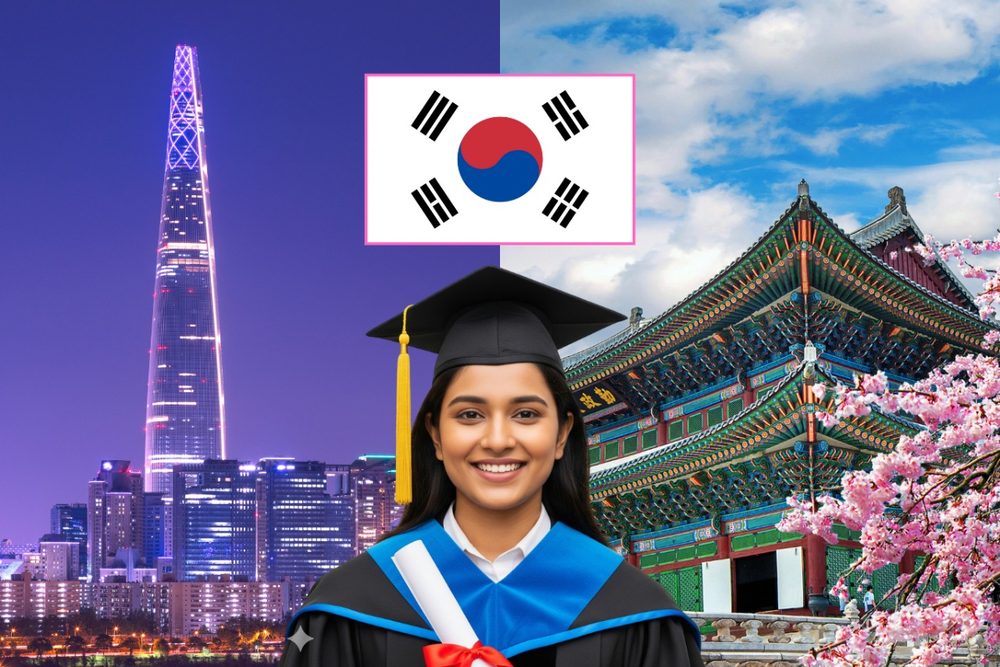
Samsung, Hyundai and LG are all based in South Korea, and for IT students that alone makes it a serious place to learn. Plenty of students first get curious through K-pop, K-dramas and Korean films. But the reasons to stay curious are practical: strong universities, affordable fees, a wide range of scholarships, and a country that's relatively close to home. This guide covers the GKS scholarship and cost of studying in Korea, along with the top universities, entry requirements and courses in demand.
If you've been weighing up scholarships, requirements, costs and in-demand courses in South Korea, read on for how to study in South Korea step by step.
Why choose South Korea?
South Korea has become a distinctive study destination, known as much for the quality of its education as for its popular culture. Here's what it offers.
1. Strong universities
Many South Korean universities rank among the world's top 100. Seoul National University (SNU), KAIST and POSTECH in particular lead in engineering, science and business.
2. Lower tuition fees
International students in Western countries can struggle with the fees. Tuition in South Korea is relatively affordable by comparison, often half the price.
3. Plenty of scholarships
There are government, university and private scholarships, some covering up to 100% of tuition fees and even living costs. That makes it much easier to study without a heavy financial burden.
4. Good career prospects
After you graduate, you'll have the chance to gain work experience and apply in fields such as IT, robotics, biotechnology and entertainment.
5. A culture the world loves
K-pop, K-drama and Korean cuisine have won millions of fans around the globe. As a student, you'll get to experience all of it first-hand.
How do you study in South Korea?
Thousands of students head to South Korea every year. Getting there takes planning, and it helps to have someone guide you. Here's how it works, step by step.
1. Talk to a counsellor early
Start by getting advice from someone who knows Korean admissions. A Glocal EduGrow counsellor can help you map out a realistic route before you spend money on applications.
2. Pick your programme and universities
Next, find out which courses are growing in South Korea and decide what you'd like to study at undergraduate or master's level. Good news: many programmes are taught in English, especially at graduate level.
3. Put your documents together
Typical requirements are academic transcripts, letters of recommendation, a statement of purpose, proof of English proficiency (IELTS/TOEFL), or TOPIK (Test of Proficiency in Korean) for Korean-taught programmes. We'll tell you exactly which ones your chosen universities ask for.
4. Plan your visa, money and housing
We can guide you through applying online to universities and for your student visa without errors, and give you practical scholarship advice. It's also worth sorting out finances and accommodation well ahead of time.
The top scholarships on offer in South Korea
One of the best things about studying in South Korea is how many scholarships are available.
1. Global Korea Scholarship (GKS)
- Covers: Full tuition, airfare, monthly living allowance, settlement allowance, medical insurance, and Korean language training.
- Eligibility: Undergraduate, Master's, and PhD applicants.
- Special note: Highly competitive, and among the most prestigious scholarships in Asia.
2. University scholarships
Many universities offer merit-based or need-based scholarships. For example:
- SNU Global Scholarships: covers tuition and living expenses.
- Yonsei University Scholarships: partial or full tuition fee waivers.
- KAIST International Student Scholarships: full tuition plus a monthly allowance.
3. Private and corporate scholarships
Organisations such as POSCO, Samsung and Hyundai also offer scholarships for outstanding international students.
What does it cost to study in South Korea?
Here's a rough breakdown of what you can expect to pay.
Tuition fees
- Undergraduate programmes: $2,000 – $8,000 (₹1.6 – ₹6.6 lakh) per year.
- Postgraduate programmes: $2,500 – $9,000 (₹2 – ₹7.5 lakh) per year.
- Medical/Law programmes: higher, around $15,000 per year.
Living costs
- Accommodation (Dormitory): $200 – $600 per month.
- Private Housing: $400 – $800 per month.
- Food: $250 – $400 per month.
- Transport & Miscellaneous: $100 – $200 per month.
On average, Indian students need around $6,000 – $10,000 (₹5 – ₹8 lakh) a year, tuition and living costs included. A scholarship can bring that down a lot. For figures that match your own university and city, ask one of our counsellors.
What opens up after you graduate
A Korean degree can lead in several directions.
1. Jobs
South Korea is home to Samsung, Hyundai, LG Group and many other companies. There are openings in IT, automotive, robotics, biotechnology and finance.
2. Post-study work visa
After graduation you can get a post-study work visa and build work experience, which also improves your prospects back home.
3. A degree that travels
A degree from a Korean university is well respected worldwide, so your options aren't limited to Korea.
Ready to plan your move to South Korea?
If South Korea is on your list, get in touch with us today and we'll help you work out the next steps, from choosing a course to settling in after you arrive. Here's what we can help with:
- Guidance on South Korea admissions and visas
- Finding suitable universities and in-demand courses
- Support from application to arrival: applications, scholarships and accommodation
- Clear, personalised counselling
Frequently asked questions
Is South Korea good for Indian students?
Yes, especially for engineering, IT, business and research. Costs are moderate, scholarships such as GKS are generous, and English-taught programmes are growing.
What does the GKS scholarship cover?
GKS typically covers tuition, a monthly living allowance, return airfare, Korean language training and medical insurance for undergraduate and graduate students.
When are the intakes in South Korea?
South Korean universities have two intakes: March (spring) and September (fall). GKS graduate applications usually open in the early part of the year.